of steelmaking coal produced per year
The Grassy Mountain Project
Modernizing a half-century old mine
Steel, it makes the cars, planes and trains that get us where we need to go. Steel builds the wind turbines, buildings, pumpjacks and oilsands facilities that power our lives and economy. Steel keeps the power lines running above our heads and braces the bridges under us. Steel is the single most abundantly used industrial metal on earth—our modern life depends on it—and modern steel production depends on steelmaking coal. And Northback wants to get Alberta’s high quality steelmaking coal to the world.
Northback is proposing the construction of a modern, steelmaking coal mine at Grassy Mountain, a mine that will allow Alberta help to satisfy global steelmaking coal demand, while contributing hundreds of millions of dollars in benefits to the province and the region, as well as hundreds of local jobs.
The proposed revised mine sits on Grassy Mountain, a site that was mined by two companies over its long history, and was last mined over 60 years ago, both underground and on the surface. At present the site sits unreclaimed, it is littered with old workings, hazardous mining geography, and derelict equipment, all making the site unsafe. If Grassy Mountain is developed into a steelmaking coal mine, upon closure the mine site will be reclaimed over its lifetime and restored to a natural state.
Northback’s revised mine design proposal is a new way of doing business. A way that manages environmental concerns and brings economic benefit both locally and to the whole Province.


Pictured: numerous hazards and old mining workings on Grassy Mountain

Where is Grassy Mountain located?
The Grassy Mountain Project is located six kilometres north of Blairmore, in southwest Alberta.
What will be produced at Grassy Mountain?
The revised Grassy Mountain Project is a proposed steelmaking coal mine utilizing an existing mine site. Steelmaking coal is a critical commodity, as it is the feedstock for steel production. Steelmaking coal is used in the production of 71 percent of the nearly 1.9 billion tonnes of steel produced each year.
The mine is expected to produce 2.5 mt (million tonnes) of clean coal per annum. With steel demand expected to grow significantly, and an under-investment in new steelmaking coal projects worldwide, Grassy Mountain provides an exceptional opportunity to produce high quality steelmaking coal and bring jobs and economic benefits to Alberta.

Scarred mountain from previous minings

2.5 Mt

71%
of world steel production uses steelmaking coal

300-400
direct, permanent jobs created
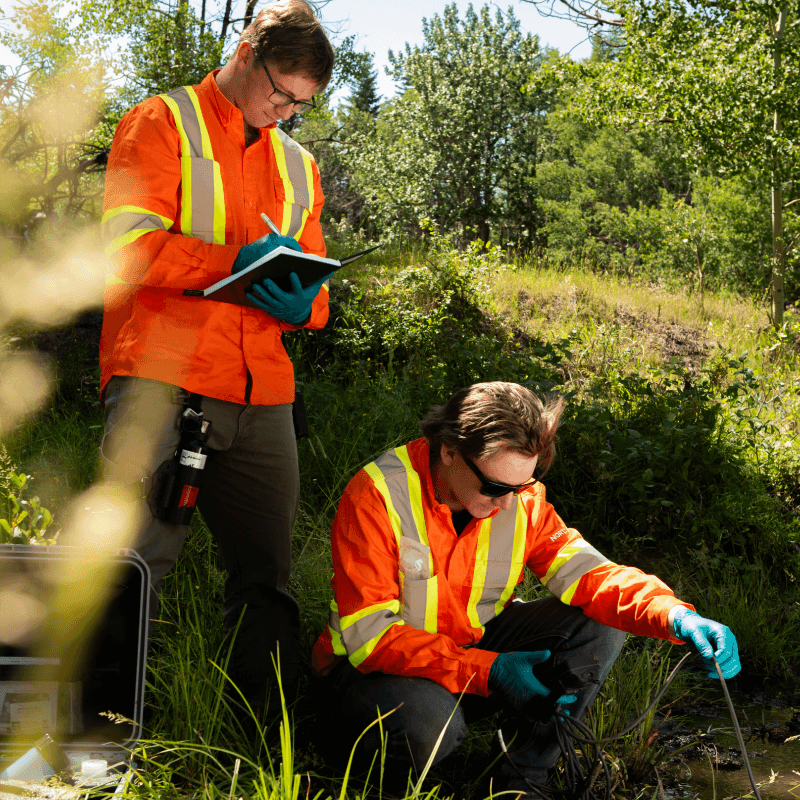
Reducing our impact on the environment
Northback’s revised Grassy Mountain Project has addressed concerns raised by the Joint Review Panel from the previous application.
This includes measures (and backup measures) to better manage water and a reduced mine footprint to lessen impact on vegetation, the reduced footprint is also informed by feedback from Indigenous engagement and avoids sites of Indigenous cultural heritage.
Northback has reduced the mine footprint by 40%—which will lessen impacts on the land, vegetation and wildlife.
Northback has reduced the size of the Grassy Mountain mine compared to the initial project proposal. The re-scoped mine has a reduced footprint by 40 percent. A smaller mine footprint means less impact on the environment.
Less mined rock, less disturbances.
Northback has also greatly reduced the amount of rock (rock that is not steelmaking coal) that will be moved per tonne of coal produced. This is significant, in that it reduces the total material moved (mined rock and coal) by more than 50%… Again, lessening the impact on the environment.
Protecting westslope cutthroat trout.
To limit adverse impacts on the westslope cutthroat trout in Gold Creek, the revised proposal excludes any rock stockpiles in the Gold Creek watershed.

Water management: treatment will begin on day one of mining
Northback will implement multiple lines of defense to manage water quality and treatment will begin from the first day of mining operations. Soluble selenium is created when rock is exposed to oxygen. So, the first step of selenium management is smart mine design and source control. By capturing water, strategically placing mine rock, and limiting that rock exposure to air and water, the project is designed to minimize the release of selenium from the outset. Water will be captured, tested, and treated using proven state of the art technology before being released.
There are currently several proven and effective methods to treat selenium that Northback will use. This layered strategy — from avoidance to containment to treatment — ensures the project meets environmental regulations and keeps water safe for residents of southern Alberta.

Mined rock pile reconfiguration
Rock from mining will be layered to create a suboxic environment to reduce soluble selenium generation. There will be no mined rock stockpiles in Gold Creek.

A treatment facility
Northback will construct a water treatment facility targeted at reduction of selenium.

Surge ponds
Capable of withstanding a 1 in 200-year weather event. Water collected in these ponds will be treated and then safely released.

Post closure water management system
Will be used to treat water after mine operations cease.
Water management
Northback will manage its water use at Grassy Mountain through multiple methods, including the recycling of water, and meeting project water demand through the use of mine dewatering (the removal of water from the mine) and water collected from precipitation to meet the mines operational needs.
No water
drawn from creeks or rivers
80%+
of the water used in coal processing will be recycled
Northback will follow strict, site-specific water quality limits set by regulators. These limits will be monitored through regular reporting and oversight by the Alberta Energy Regulator.
Addressing local concerns: the Rail Loop Design
After coal is mined and processed at the Grassy Mountain site, it will be transported via a covered overland conveyor system to a rail loadout facility situated along Highway 3 in Blairmore, Alberta. This facility will enable the direct loading of coal into rail cars (approximately 2-3 times per week), facilitating its shipment to markets.
Northback has listened to concerns raised by citizens of the Crowsnest Pass regarding the rail loop and will implement numerous mitigation techniques to address dust, manage noise and improve the visual impact of the rail loop. Rail cars will be loaded below grade (i.e in a rock cutting), to preserve sightlines. Northback will also construct a berm, install screening, artwork, and plant trees. Trains will be loaded using the modern practice of continuous loading, with no stopping to reduce noise.


Economic benefits of Building Grassy Mountain
Local support: the Crowsnest vote
The Grassy Mountain project has immense local support. On November 25, 2024, a strong majority of 72 percent of voters voted ‘Yes’ to the question “Do you support the development and operations of the metallurgical coal mine at Grassy Mountain?”
The residents the Crowsnest Pass understand the benefits of the mine and Northback would like to see these benefits brought to the region.
Economic benefits
Jobs
Northback estimates 300-400 direct, permanent jobs will be created by the mine, and a peak of over 600 during project construction. Northback will prioritize employment of residents of the Crowsnest Pass and First Nations people, as well as from nearby regions over remote workers during operations. For every job created, there will be additional indirect jobs created in the region.
300-400
jobs
600+
jobs during peak construction

A significant investment for the region
In 2024 Canadian metallurgical coal exports were valued at nearly $9 billion. The sector creates thousands of direct and indirect jobs, while supporting dozens of municipalities, and the families that live in them.
The Grassy Mountain Project would bring to southern Alberta the benefits that steelmaking coal mines provide in other jurisdictions, including British Columbia. This project would bring significant economic benefits to the region. Since 2018, Northback has spent between $155- and $170-million on Canadian vendors, contractors and staff. Based on market forecasts and estimated construction costs, the economic benefits to Alberta, including payments to governments over the life of the project, could amount to hundreds of millions.
Taxes and Payments to Government
Like oil, natural gas, and other natural resource sectors, metallurgical coal’s value can be subject to commodity price changes. Under current economic conditions Northback estimates that the project will provide hundreds of millions in taxes and royalties for the Province.

Reclamation
Alberta requires reclamation on lands impacted by industrial activities; it is required by all operators. Northback’s operations at grassy mountain will be no different, a reclamation plan is required for the Grassy Mountain Project, including previously unreclaimed areas. The reclamation process will employ progressive reclamation, meaning that portions of the mine will be reclaimed even while mining operations continue.
In addition to reclamation of disturbed areas from mining operations. Northback will also be rehabilitating legacy mining areas within the development footprint that would otherwise not be improved. Northback is currently trialing methods to expedite reclamation of native species— such as rough fescue— to improve the reclamation process. Once mining operations end, the land will be returned to a natural state that will be safe for use.
Sign up for information here!
Sign up to receive updates from Northback directly to your inbox.